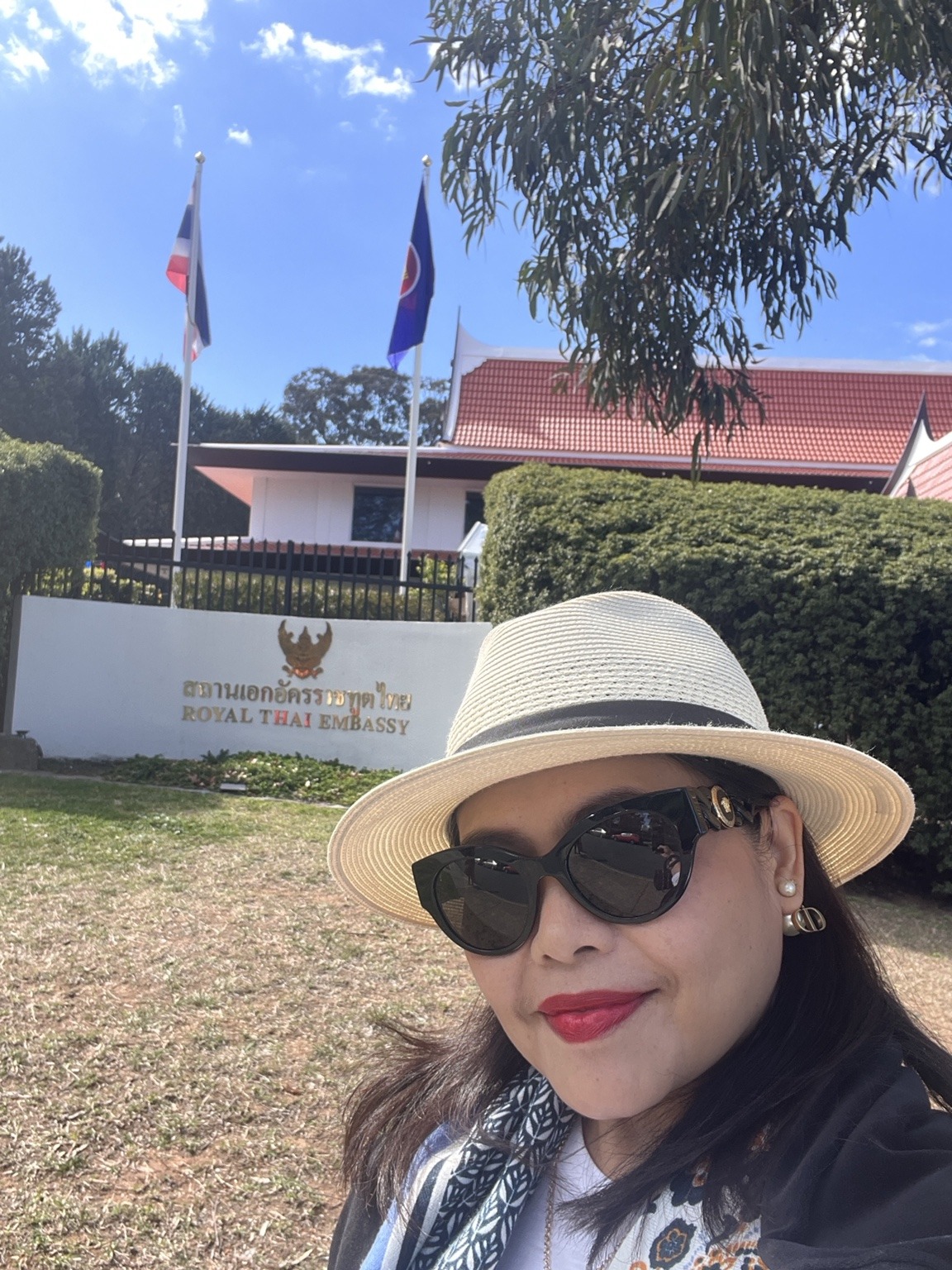
As part of my professional role as an Educational and Research Officer, working under the Royal Thai Embassy in Australia, I had the opportunity to participate in Thai Festival in Canberra.
The event was more than a cultural celebration. It brought together the Thai community, Australian society, public institutions and people with different backgrounds in one shared space.
For me, this kind of experience is closely connected to the work I am developing through Talk to Sipim. Cross-cultural communication is not simply about speaking another language correctly. It is about understanding how people interpret messages, how trust is built, how identity is represented and how expectations can differ from one cultural environment to another.
Communication happens beyond words
At community and diplomatic events, communication happens in many forms: the way people greet each other, how they introduce themselves, how organisations present culture, how communities build relationships and how people from different backgrounds find common ground.
Working in education and research also means listening to the experiences of Thai people in Australia and understanding the practical issues they face while studying, working and living in a different social and institutional environment. These conversations continuously reinforce one idea for me: effective communication depends on context as much as language.
Connections that continue across communities
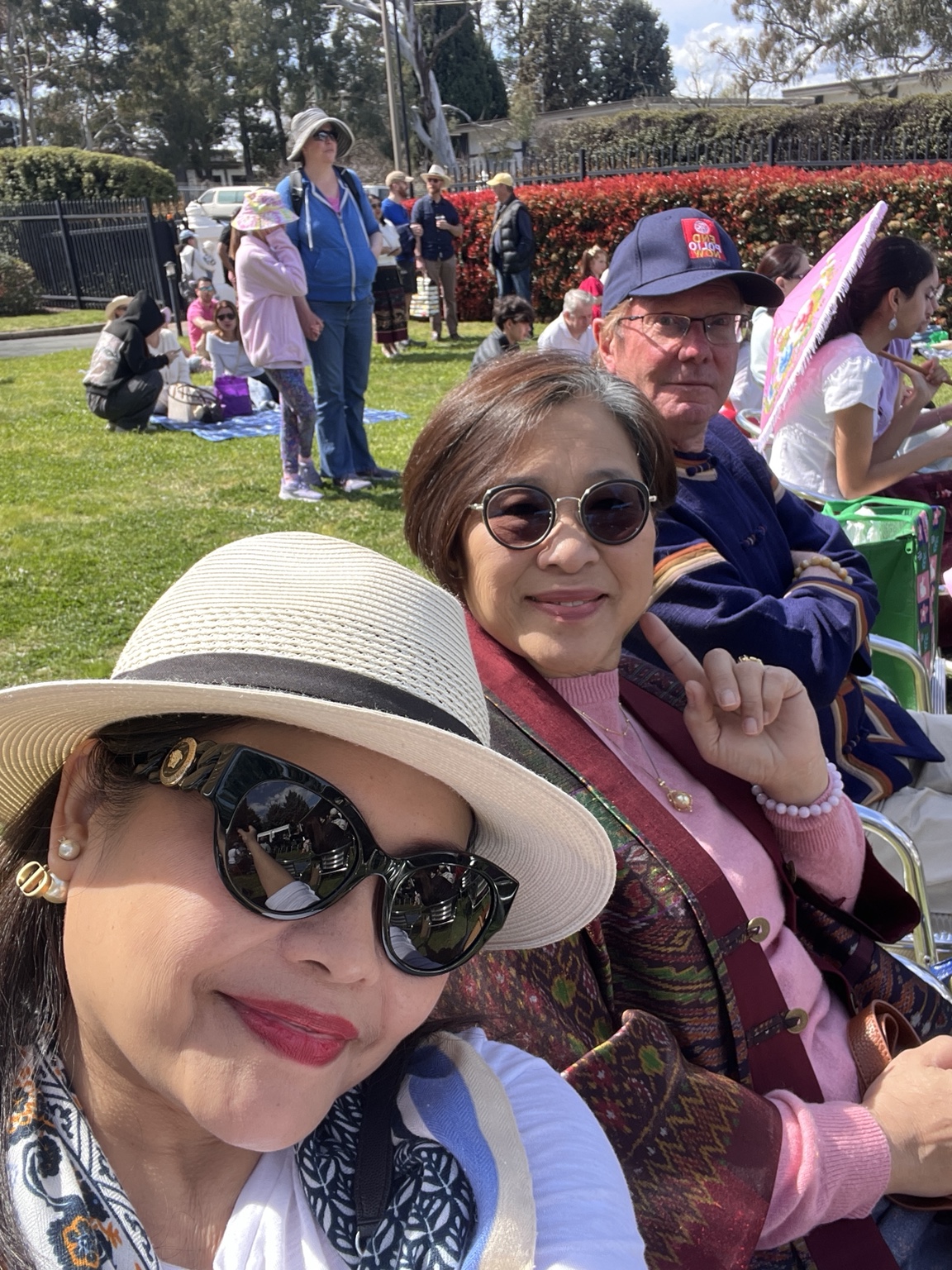
One of the enjoyable moments of the day was meeting Rotarian David and Tippy Anderson, who travelled from Melbourne and are involved in charitable work through Rotary.
The meeting felt especially meaningful to me because I was also a Rotary member in the past. Rotary introduced me to the value of community service, volunteering and building relationships with people from different backgrounds. Meeting David and Tippy again in a Thai community setting reminded me that professional and cultural connections often extend far beyond a single organisation or event.
These encounters are another example of cross-cultural communication in practice: people connecting through shared values, community service and genuine relationships, even when their cultural and professional backgrounds are different.
“The same words can create different meanings in different cultures.”
Experiences like Thai Festival continue to strengthen my interest in business and cross-cultural communication — particularly how people communicate with confidence, build trust and navigate different cultural environments while remaining authentic to who they are.
This is the perspective I bring into Talk to Sipim: practical communication shaped by real work, real people and real cross-cultural experience.